Unsafe Acts
- ✦Actions that may cause injuries
- ✦Property damage
- ✦Repeated unsafe practices
Workplace behaviour and safety mindset play a major role in preventing accidents, injuries, unsafe acts and operational disruptions. Even when an organization has strong procedures, risk assessments, PPE and safety systems, the actual level of safety depends on how people behave at work every day.
A positive safety mindset means employees think before acting, follow safe work practices, report hazards, care about their own safety and look out for others.
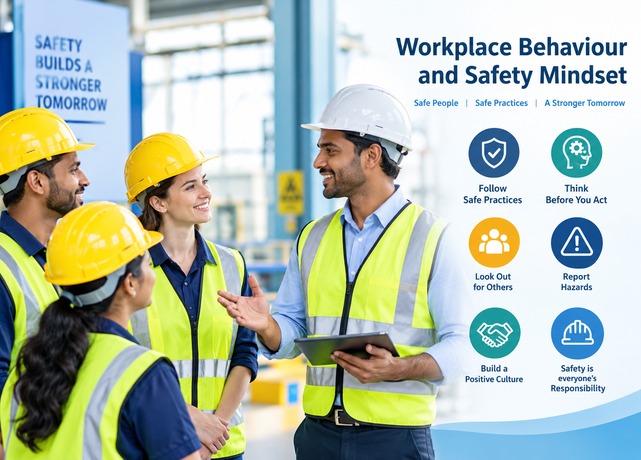
Safety is not controlled by rules and documents alone. It is strongly influenced by daily decisions, attitude, communication, supervision and personal responsibility. A worker’s mindset can determine whether they follow the correct procedure, wear PPE, report a near miss, stop unsafe work or ignore a hazard.
A strong safety mindset helps organizations:
Workers, supervisors, contractors, managers and HSE teams must work together to maintain safe practices and report risks.
Poor workplace behaviour can create serious safety risks even where procedures are available. Accidents may occur when people take shortcuts, ignore warning signs, use equipment incorrectly, fail to communicate or underestimate risks.
Improving workplace behaviour requires continuous communication, leadership commitment, training, supervision and employee involvement. It should not be treated as a one-time safety campaign.
Organizations should confirm which requirements and standards apply to their operations before publication or implementation.
Leaders influence safety culture through their actions, decisions and communication. Every employee also has a role in maintaining a safe workplace.
A positive safety culture is created when safe behaviour becomes normal across the organization. Employees should feel comfortable reporting concerns, speaking up and participating in safety improvements.
At EHS Management Consultants, we support organizations in improving workplace behaviour and strengthening safety mindset through safety culture assessments, behavioural safety observations, training programs, toolbox talk support, site inspections, risk assessments and practical corrective action plans.
Our team also supports safety awareness materials, safe work procedures, behavioural observation checklists, safety campaign topics, incident learning sessions and employee engagement programs. These activities can help organizations reduce incidents, improve participation, strengthen compliance and create a safer, more responsible workplace.
Answers to common questions about safe workplace behaviour, employee responsibility and safety culture.
Workplace behaviour and a positive safety mindset are essential to preventing incidents and strengthening safety culture. Clear leadership, regular training, open reporting, effective supervision and employee involvement help make safe behaviour a daily habit.
By identifying unsafe behaviours and addressing their root causes, organizations can improve participation, strengthen compliance and create a safer and more responsible workplace.